
Publications
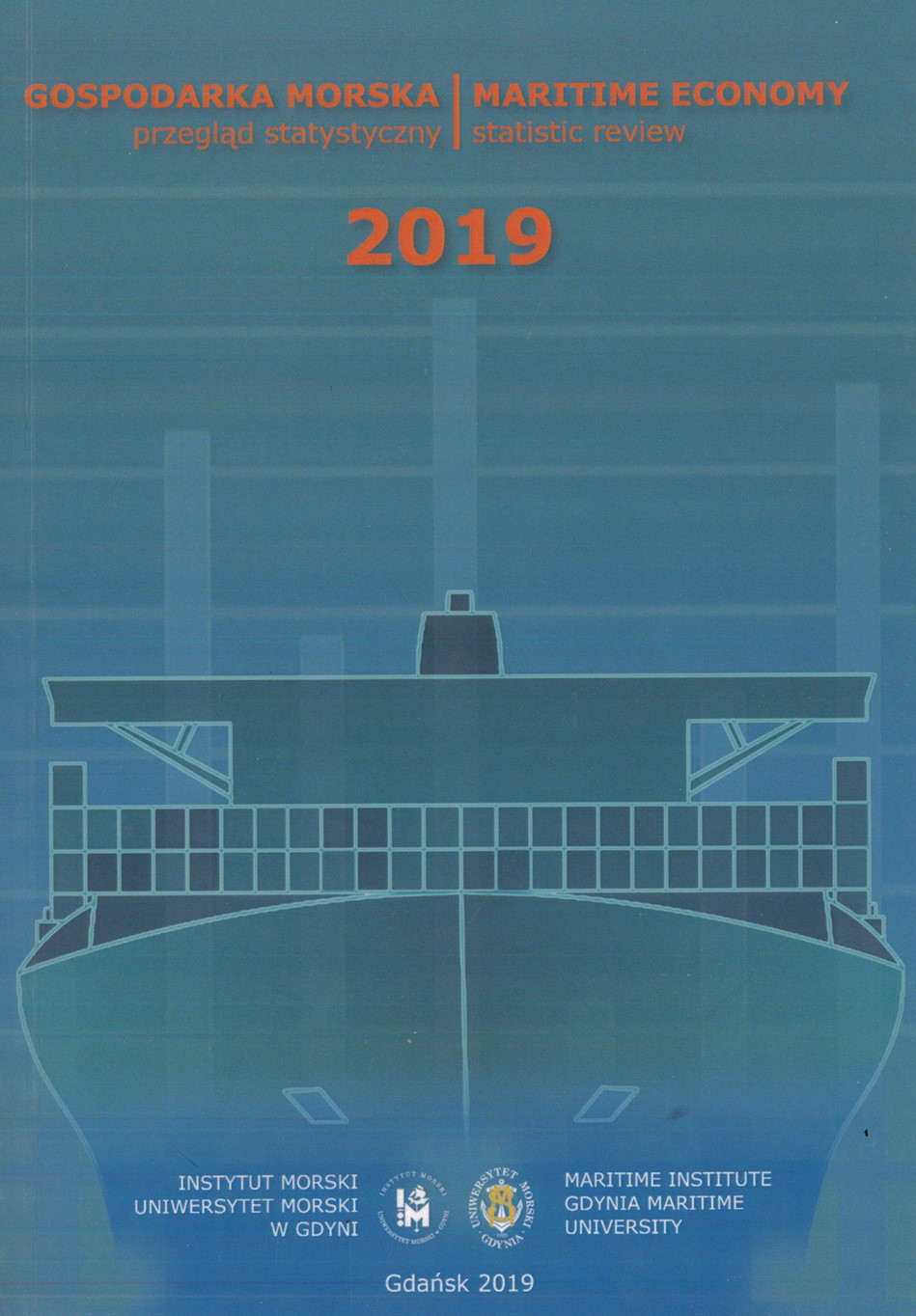
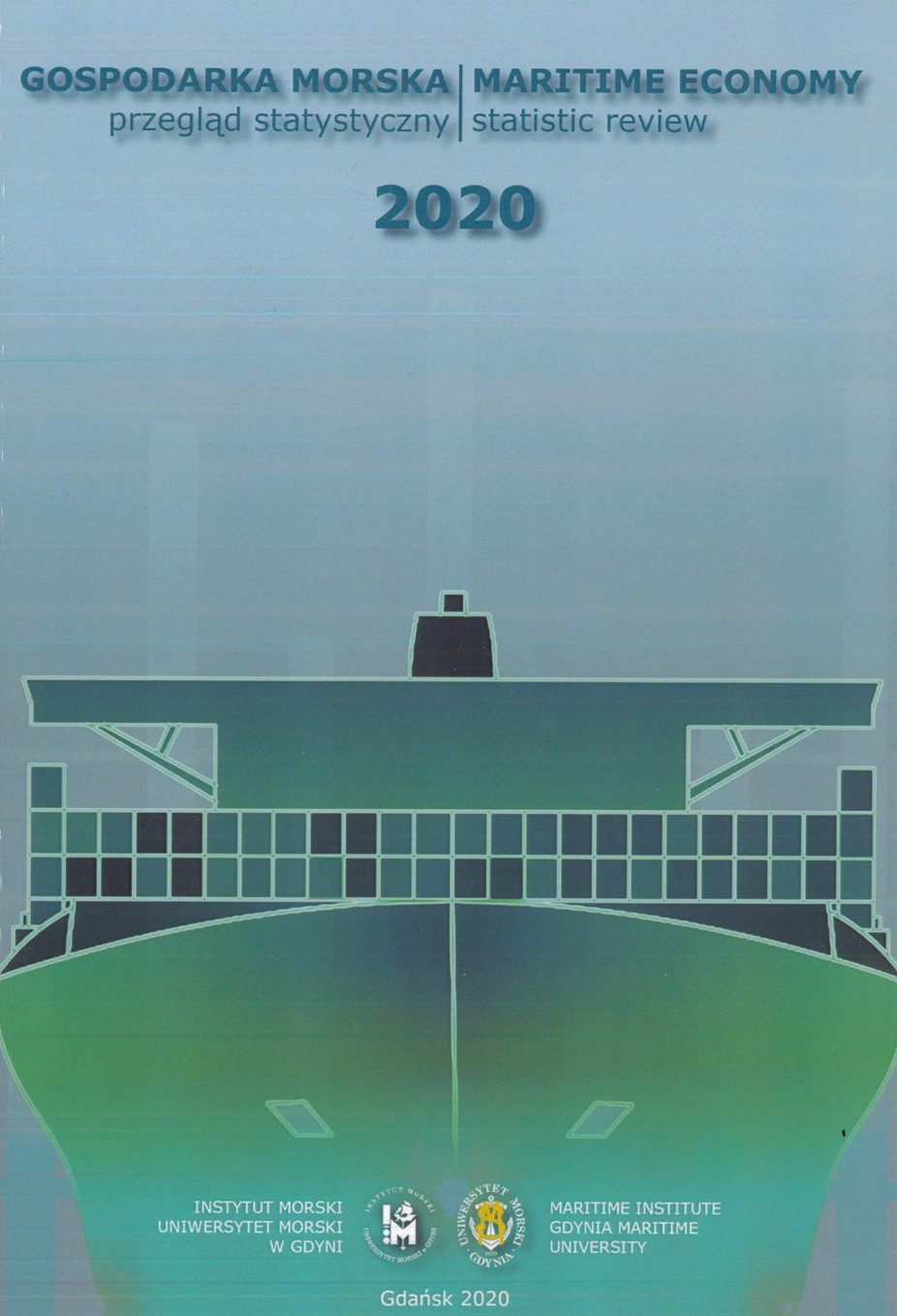
‘Maritime Economy. Statistic Review 2020’, Maritime Institute, Gdynia Maritime University, Gdańsk 2020
‘Maritime Economy. Statistic Review’ is a periodical publication, which is to continue a series of studies in the field of maritime statistics, being the products of the research initiated by the Maritime Institute in Gdańsk as early as in 1960. The current 2020 edition is the 45th yearbook prepared by the Institute. Originally, it was published under the title ‘Maritime Statistical Yearbook’, and recently as ‘Maritime Economy. Statistic Review’. The publication provides basic information on the Polish and global maritime economy usually for the last three years. The layout and scope of the publication were modelled on previous compilations to maintain the continuity and comparability of data.
The division into two parts has also been maintained. The first part refers to Poland’s maritime economy and covers major information on its branches, sectors and enterprises. The second part provides statistical data on phenomena occurring in the global maritime economy. Most of the information was taken from the publications and materials produced by the Central Statistical Office, as well as from reports and materials provided by companies and institutions within the Polish maritime sector. Foreign data are compiled based on the available yearbooks and other international sources.
 Local ports as development centres’, Maritime Institute, Gdynia Maritime University, Gdańsk 2020
The study is aimed at analysing the local ports along the Lithuanian, Polish, German, Danish, Swedish and Belgian coasts as development centres situated along the E60 international waterway. The research was conducted within the framework of the European project entitled ‘Inland Blue Transport Connector E60 – INCONE60’, within work package 3 – Transport economics and market review, activity D3.2.
The study provides a comprehensive analysis of the state of the local seaports in the southern Baltic Sea and their development prospects.
It identifies the challenges faced by the port authorities and outlines potential development opportunities. The subsequent chapters present the ownership structure of the local ports in the southern Baltic region, provide a detailed description of the sixty local ports situated along the E60 waterway, analyse the role of local seaports in the southern Baltic in coastal regional development, and examine the interdependencies between the ports and their regional hinterland. To sum up, it appears that the blue and green growth policies introduced at the EU level may continue to have a significant impact on the development of local ports. Therefore, the last chapter of the study presents the blue and green technologies already in use at local ports along E60, as well as the opportunities for their implementation in ports that do not yet operate under a blue or green growth model.
 Local ports and their impact on regional economy’, Maritime Institute, Gdynia Maritime University, Gdańsk 2020
The study aims to analyse the local ports along the Lithuanian, Polish, German, Danish, Swedish and Belgian coasts, and their impact on the regional economy. It was prepared within the framework of the European project entitled ‘Inland Blue Transport Connector E 60 – INCONE60’, within work package 3 – Transport economics and market review, activity D3.1.
The main subject of the analysis is the existing transport system of the southern Baltic region, and, in particular, short-distance shipping, inland navigation, and railway and road transport in individual countries.
The subsequent chapters present the current development status of the E60 international waterway, its potential impact on the coastal areas of the southern Baltic and North Sea regions, the state of port infrastructure and types of cargo handled in individual ports, and analyse cargo handling costs. The report also includes a case study of the port of Vordingborg to illustrate the issues discussed above.
Contact
Marcin Burchacz
Phone: 58 301 16 41 ex. 35
Marcin.Burchacz@im.umg.edu.pl